Congratulations! You Got the Job... Now What?
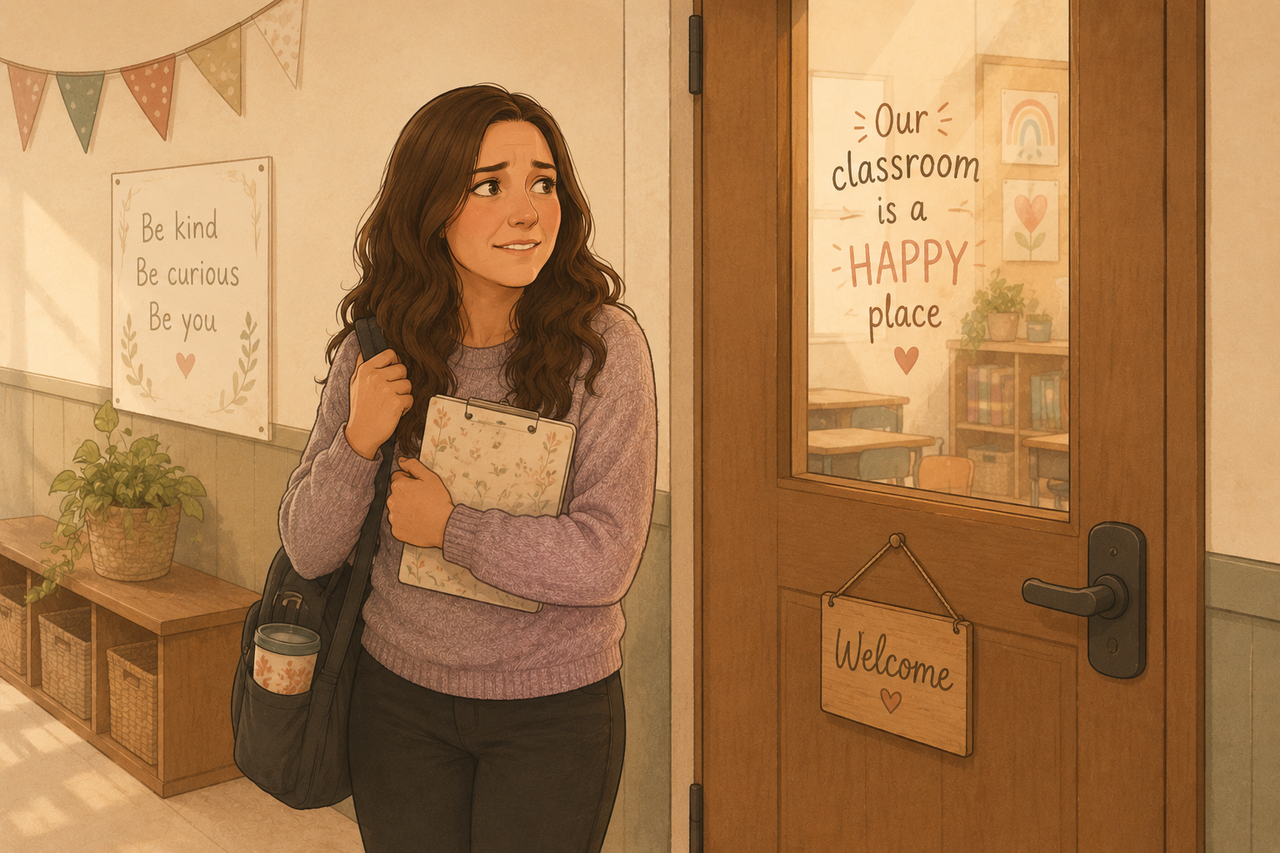
If you're anything like me, you've probably already started imagining the first day of school—and maybe feeling just a little sick to your stomach.
I still remember opening my class list for the first time. I stared at all those names and thought, "These kids are my responsibility now." It honestly made me want to puke.
What if I couldn't teach them how to read?
What if I completely lost control of the class?
What if parents questioned everything I was doing?
The truth was, I had no idea what I was doing.
I had spent years studying to become a teacher, but nothing quite prepares you for the moment you close your classroom door and realize that you're the one in charge.
If you're getting ready to start your first year of teaching, I hope this article feels like a conversation with someone who's been there. These are the lessons I wish someone had sat me down and told me before I ever stepped into my own classroom.
Someone said this to me while I was still in my practicum:
"You don't get to be the teacher you want to be in your first year."
At the time, I didn't really understand what they meant. I thought, "Well... why not?"
But those words stayed with me through my first few years of teaching, and eventually I realized exactly what they meant.
Your first year isn't about being the perfect teacher. It's about becoming one.
Maybe you imagined teaching would be full of creative lessons, exciting projects, and Pinterest-worthy classrooms. Instead, you find yourself trying to stop arguments, figure out report cards, answer emails, and manage behaviors you didn't even know existed.
That's okay.
If your classroom isn't Pinterest-perfect during your first year, don't beat yourself up. You have much bigger priorities.
I used to remind myself:
Everyone is safe.
We learned at least one thing today.
That's enough.
Take it one day at a time.
It's kind of like Monopoly.
You don't know all the rules when you first open the box. You learn as you go. Every lap around the board teaches you something new, and before long you're making decisions without even thinking about them.
Teaching is the same way.
You don't have to know everything on the first day. In fact, you can't.
Every difficult conversation, every lesson that flops, every classroom success, and every mistake becomes part of the teacher you're growing into.
I think this is one lesson a lot of new teachers have to learn the hard way.
While I didn't spend a fortune on classroom decorations, I definitely spent a lot of time on them.
Looking back, decorating my classroom was probably the biggest flop of my first year.
It was a disaster.
I imagined this beautiful, cozy classroom where my students would be inspired to learn. Instead, I spent half my day telling children not to touch the decorations.
I had these cute little vases and flowers around our carpet area because I thought they made the room feel warm and inviting.
The kids thought they were toys.
Instead of teaching, I was constantly reminding students to leave my decorations alone. Looking back, I should have swallowed my pride and either taken them home or put them somewhere the kids couldn't reach.
Something else I learned is that classroom decorations don't affect every child the same way.
I had one student who found our classroom incredibly overwhelming. As the year went on, it became clear that he had some significant support needs, and we were working together as a school to better understand how to help him. One thing we consistently noticed was that busy walls, colorful displays, and lots of classroom "stuff" made it much harder for him to focus.
His teacher from the year before told me she had actually kept her classroom walls as simple as possible because too much visual stimulation was overwhelming for him.
That conversation completely changed how I thought about classroom design.
And honestly?
It wasn't just him.
Even my students without additional learning needs were often distracted by all the things I had carefully arranged around the room.
Now, I try to keep my classroom much simpler.
If decorating is something you love—and I completely understand because I do too—pick one shelf, one bulletin board, or one cozy corner where you can enjoy your cute things.
Maybe your desk is the place that makes you smile.
Just remember that anything within reach will probably become fascinating to a six-year-old.
If you're going to have nice things...
Put them up high.
The classroom isn't really yours.
That sounds depressing, but it's true.
Even with a permanent contract, I've never taught in the same classroom two years in a row.
The year before my maternity leave, I taught kindergarten. I spent months thinking about everything I wanted to improve the following year. Then, in May, I got an email saying I'd be teaching a Grade 2/3 split instead.
It was disappointing.
I had this picture in my head of slowly building my dream classroom year after year.
My little empire.
But teaching doesn't always work that way.
Rooms change.
Grades change.
Schools change.
I also knew a teacher who spent nearly $3,000 on classroom supplies.
She loved her classroom, but when she prepared to go on maternity leave, she was incredibly stressed about leaving everything behind. Unless she packed it all up herself—while heavily pregnant—it would simply stay in the room for the next teacher.
That story has always stayed with me.
So here's my advice:
Invest your time and money in things that make teaching easier—not just things that make your classroom prettier.
The beautiful classroom will come.
But it doesn't have to happen in your first year.
That's not to say you shouldn't make your classroom a place you love.
Just give yourself permission to build it slowly
One of the best things you can do during your first year is ask questions.
You don't have to prove that you're the smartest person in the building. You don't have to pretend you have everything figured out.
In fact, the teachers who seem the most confident are usually the ones who aren't afraid to ask for help.
People genuinely want to support new teachers. They remember what it felt like to be in your shoes. So introduce yourself, ask questions, and build relationships with the people around you. I know that isn't always easy—every school culture is different—but don't isolate yourself if you can help it.
I know this because...
I was terrified that people would realize I didn't know what I was doing.
When I got my first teaching job, I cared far too much about looking competent. I hated asking questions because I thought it would make people think I wasn't good enough. Even constructive feedback felt personal.
To be honest, I also didn't always feel like I was working in the warmest or most welcoming environment. There were days when I felt incredibly lonely.
Looking back, I wish I had reached out more.
One of the best decisions I made was connecting with my division's instructional coach.
I didn't even know she existed until halfway through the school year! At first, my pride made me hesitant to ask for help, but once I did, we ended up talking almost every day.
She introduced me to incredible teaching resources.
She modeled lessons in my classroom while I observed.
She helped me make my lessons more hands-on.
She even walked me through writing my very first report cards.
I honestly don't know how I would have survived that year without her.
If your division has a mentor, coach, or experienced teacher who's willing to support you, take advantage of it.
You don't have to figure everything out on your own.
And if your school doesn't have someone like that, I'd love to be part of your support system.
I've started offering teacher coaching calls because I know how valuable it is to have someone you can ask questions, bounce ideas off of, or simply debrief with after a hard day.
This is one of those jobs you'll thank yourself for doing ahead of time.
Before the school year even starts, put together a simple substitute binder.
Include things like:
Then put everything in a bright binder labeled SUB PLANS and leave it somewhere obvious in your classroom.
Trust me—you don't want to be putting this together when you wake up sick at 5:30 in the morning.
There will be days when you're exhausted, your child is sick, or life simply happens.
Having a substitute plan ready means you can focus on taking care of yourself instead of scrambling to explain your entire classroom to someone else.
It doesn't have to be fancy.
In fact, simple is usually better.
Choose activities your students already know how to do independently so your substitute can spend less time managing confusion and more time enjoying the day with your class.
Future you will be incredibly thankful.
One of the biggest lessons I learned during my first few years of teaching was this:
Every minute you spend teaching a routine will save you hours later in the year.
When I first started teaching, I thought I needed exciting lessons to keep my students engaged.
I was always looking for the next fun activity, the next craft, or the next way to make learning more exciting.
What I actually needed wasn't more exciting lessons.
I needed better routines.
Predictable routines.
When students know exactly what to do, they ask fewer questions, transition more smoothly, become more independent, and need far less redirection throughout the day.
That means less decision fatigue for you and more energy to spend on actually teaching.
One routine completely transformed my classroom: our morning routine.
Instead of trying to settle twenty excited students while taking attendance, answering questions, tying shoes, and getting organized for the day, my students came in already knowing exactly what to do.
They practiced important literacy and math skills independently while I greeted students, connected with families, answered questions, and got everything ready for the day.
It didn't just make my mornings calmer.
It changed the entire tone of our classroom.
By October, my students didn't need me to tell them what to do anymore.
They already knew.
And there is something incredibly freeing about walking into your classroom knowing it can run without you directing every single minute.
If you're looking for one thing to invest your energy into during your first year, make it routines.
Your future self will thank you.
If you're looking for a simple place to start, I've shared the exact editable morning routine I use with my own students in my Teachers Pay Teachers store.
👉 Take a look at the Kindergarten Morning Routine here.
The more your classroom runs on routines instead of reminders, the less exhausted you'll feel at the end of the day.
One of the biggest challenges in elementary school is transitions.
Especially recess.
When I first started teaching, I had this picture in my head of students coming inside, hanging up their coats, sitting quietly on the carpet, and being ready to learn within a few minutes.
That almost never happened.
Someone had been left out of a game.
Someone got hit with a snowball.
Someone was crying.
Someone had lost a mitten.
There was almost always some kind of recess drama that needed my attention.
During my first year, I tried to ignore it.
I'd tell students they needed to talk to the teacher who had been on supervision because I was eager to get our lesson started.
The problem was...the drama came into the classroom anyway.
Students couldn't focus because they were still upset.
I couldn't focus because everyone wanted my attention.
Eventually, I realized I needed to plan for that reality instead of fighting against it.
In my second year, I always had an activity waiting for students when they came in from recess that required zero explanation from me.
The students who were ready could get started immediately while I helped the students who needed me.
That one change took so much pressure off.
Instead of feeling frustrated that recess problems were "ruining" my lesson, I could actually deal with them without twenty other students waiting for me.
I even had one student who refused to come inside unless I went out to get him.
During my first year, that would have completely derailed my day.
By my second year...
I expected it.
And because I expected it, I could respond calmly instead of feeling overwhelmed.
Sometimes good classroom management isn't about preventing problems.
It's about expecting them.
The key is choosing activities that don't require you.
I thought teaching children how to read would be one of the easiest parts of teaching.
I was wrong.
University prepared me really well in a lot of ways...
But if I'm being honest, I don't remember learning much about how to actually teach a child to read.
The one piece of advice I remember?
Apparently it's good for mothers to read to their babies while they're still in the womb.
Very helpful.
Meanwhile, I was standing in front of a Grade 1 class wondering how I was supposed to teach twenty little humans to become readers.
In my naïveté, I thought we'd sing the alphabet every day, practice writing a few letters, and somehow everyone would just... learn to read.
It turns out literacy is a lot more complicated than that.
Children need to learn letter names.
Then letter sounds.
Then that many letters make more than one sound.
Then how to blend sounds together.
Then how to write those letters.
Then how to spell words.
Then how to read sentences.
It's an incredible amount of learning packed into one school year.
One of the biggest lessons I learned is this:
Don't rush it.
If you're teaching early years, literacy is one of the greatest gifts you can give your students.
There will always be more curriculum outcomes than you have time for.
But reading?
Reading unlocks almost everything else.
When children learn to read confidently, every other subject becomes more accessible.
That's why I would encourage new teachers to spend the time building strong literacy routines instead of constantly searching for the next exciting activity.
Try different approaches.
Read books.
Watch other teachers.
Take professional development whenever you can.
There are a lot of opinions about the "best" way to teach reading.
Learn from all of them.
But don't be afraid to trust your own observations too.
If something isn't working for your students, it's okay to adjust your approach.
Good teachers aren't the ones who never change.
They're the ones who keep learning.
If you're looking for a simple place to start, I've shared the literacy and morning routines that have made the biggest difference in my own classroom.
By my second year, I started to notice a pattern.
I was perfectly capable of teaching and managing 98% of my class. But every year, there seemed to be one or two students whose needs were simply much greater than what I could provide on my own.
The difference was that, during my first year, I took those students' behavior personally.
If a student refused to work, I thought I had failed.
If they had a meltdown, I assumed I had handled something incorrectly.
If nothing I tried seemed to help, I blamed myself.
Eventually, I realized something that completely changed the way I viewed teaching.
Some students aren't struggling because you're a bad teacher. They're struggling because they're struggling.
That doesn't mean we stop trying.
It means we keep showing up, building relationships, trying new strategies, and working together with families and school staff to support them as best we can.
But it also means recognizing that we can't meet every need by ourselves.
I am not a doctor.
I am not a psychologist.
And I am not that child's parent.
My responsibility is to create a classroom where students feel safe, supported, and encouraged to learn. I can teach routines, build relationships, communicate with families, and advocate for additional support when it's needed.
But I can't solve every challenge on my own.
That realization took a tremendous amount of pressure off my shoulders.
I stopped measuring my success by whether every child behaved perfectly.
Instead, I measured it by whether I was showing up every day, caring about my students, and doing my very best with the resources I had.
Sometimes, that's enough.
If there's one thing I wish someone had reminded me during my first year, it's this:
You cannot pour from an empty cup.
Teaching can be one of the most rewarding jobs in the world.
It can also be one of the heaviest.
Some years are filled with laughter and excitement.
Other years ask more of you than you ever thought you could give.
Whatever kind of year you're having, don't forget that you're a person before you're a teacher.
There will be days when administration can't give you everything your classroom needs.
There will be times when resources are stretched thin.
There will be things completely outside of your control.
You can't carry all of that by yourself.
Sometimes taking care of yourself means setting boundaries.
Sometimes it means leaving school at a reasonable hour.
Sometimes it means asking for help.
Now I realize that taking care of myself isn't selfish.
It's what allows me to keep showing up for my students.
One thing that has helped me over the years is reminding myself why I became a teacher in the first place.
It wasn't to have perfect bulletin boards.
It wasn't to write flawless report cards.
It wasn't to check every box on my to-do list.
I became a teacher because I wanted to help children.
When I lose sight of that, everything starts to feel overwhelming.
When I remember it, everything else falls back into perspective.
Your first year isn't about being perfect.
It's about surviving, learning, and becoming the teacher you're meant to be.
There will be lessons that flop.
There will be days you drive home wondering if you chose the right career.
There will also be moments when a student finally understands something because of you, gives you a hug, or tells you they can't wait to come back tomorrow.
Those moments are worth holding onto.
If you finish your first year with more wisdom than you started with, you've been successful.
The teacher you've always wanted to become isn't built in one school year.
She's built one lesson, one mistake, one relationship, and one student at a time.
Join the letter and I’ll send the Morning Routine Printables to your inbox.
No spam, ever. Unsubscribe anytime.