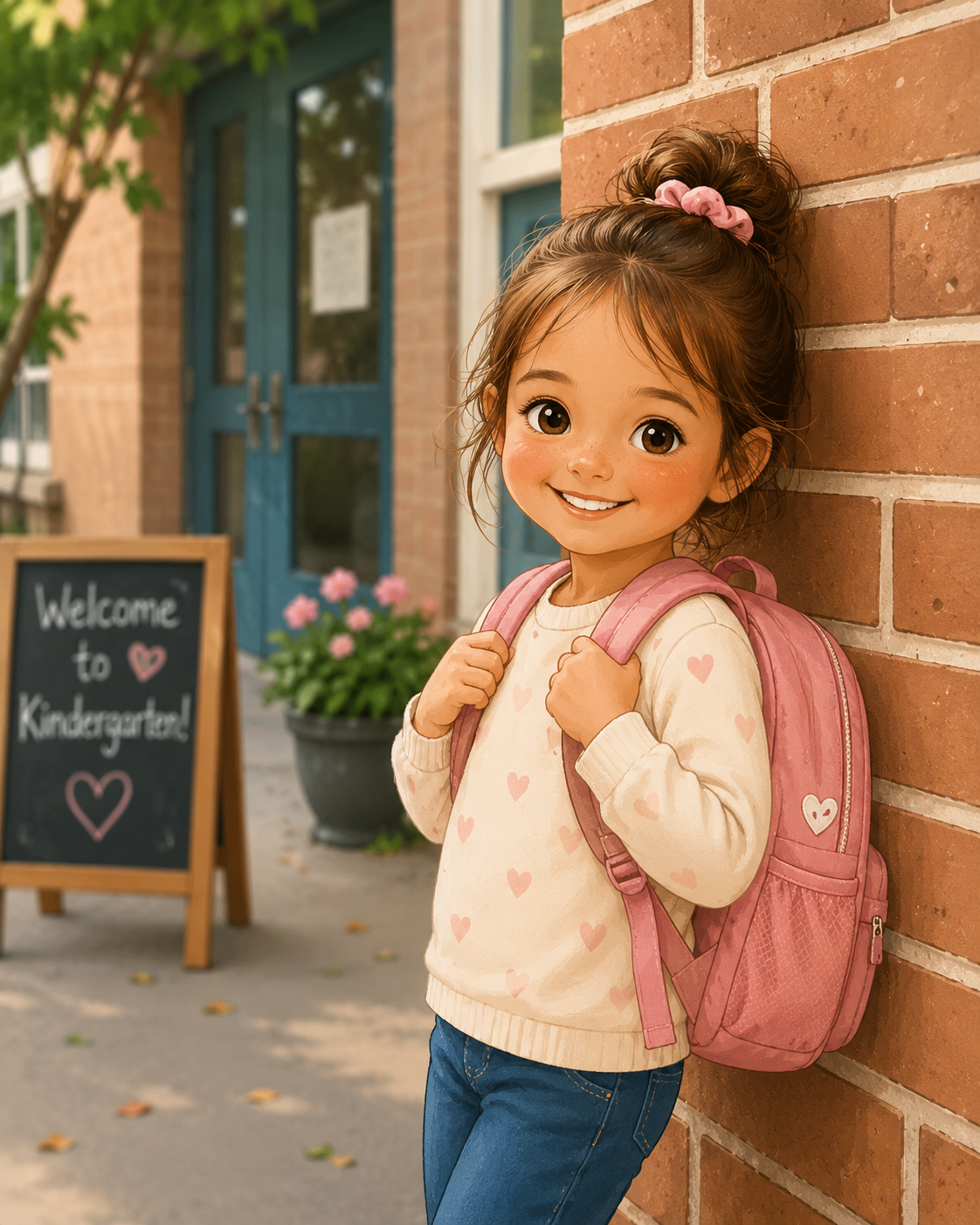
If you're reading this wondering whether your child is "ready" for kindergarten, I want you to take a deep breath.
Every September, children walk into kindergarten with different personalities, experiences, and abilities. Some already recognize every letter of the alphabet. Others have never held a pencil. Some confidently wave goodbye and run into the classroom, while others cling tightly to their parents with tears in their eyes.
The wonderful thing about kindergarten is that it was designed for all of those children.
As a kindergarten teacher—and now as a mama myself—I know that sending your child to school for the first time can be incredibly emotional. More often than not, I think it's actually harder on the parents than it is on the children. It's scary trusting someone else to care for the little person you love most, and it's hard realizing that your tiny baby is growing into a big kid.
The good news is that there isn't one perfect checklist that determines whether a child is "ready" for kindergarten. Every child develops at their own pace, and kindergarten teachers expect that. Our job isn't to welcome children who already know everything—it's to teach them, encourage them, and help them grow.
That said, there are a few simple skills that can make those first few weeks of kindergarten feel much smoother for both your child and their teacher. If I could recommend focusing on just one thing before the school year begins, it wouldn't be memorizing the alphabet or counting to one hundred.
It would be helping your child become more independent.
The skills below are the ones that, in my experience, help children feel more confident, more capable, and more prepared as they begin this exciting new chapter. Remember, your child doesn't need to master every one of them before September. Think of this list as a guide, not a checklist. Every small step you take now will help build your child's confidence as they start kindergarten.
If I could encourage parents to focus on just one skill before kindergarten, it would be independence.
As a kindergarten teacher, I quickly learned that the children who adjusted most easily weren't always the ones who knew the most academically. They were often the children who were willing to try things on their own. In a classroom of twenty five-year-old's, it's simply impossible for one teacher to help every child every minute of the day. Children who are able to complete simple everyday tasks independently often feel more confident and are able to spend more time enjoying and engaging in classroom learning.
Pretty soon into teaching kindergarten, I made the rule with my students that they had to try to do things by themselves before they could ask me for help. Often times, they would get it on the first try after asking me to open their yogurt. They would give me a silly grin and run off to enjoy their snack. I remember one girl spent about 20 minutes getting her fruit cocktail open by herself for the first time. She was very patient and kept at it. When she finally got it open, she was beaming with pride.
Think about some of the routines in your home. How often do you open things for your child? Do you dress them? Can they open their lunch containers by themselves? Can they put items into their backpack without help? Can they play independently for short periods of time?
If some of these tasks are still difficult for your child, don't worry—there is plenty of time to practice. Instead of stepping in right away, try giving them the opportunity to figure it out first. Offer encouragement, demonstrate the skill if they need it, and then let them try again. Sometimes children simply need a few extra minutes and a little patience to surprise both you and themselves.
The benefits of fostering independence go far beyond preparing for kindergarten. As children learn to do things on their own, they also develop patience, perseverance, and problem-solving skills. Instead of immediately looking to an adult for help, they begin to think creatively and keep trying when something feels difficult.
One of the greatest gifts independence gives a child is confidence. Every time they zip up their own jacket, clean up their toys, or successfully open their lunch container, they begin to believe, "I can do hard things." Those small victories build confidence that carries into every part of their learning.
One of my favorite quotes is by Jordan Peterson: "Never do for a child what they can do for themselves." While we all love helping our children, sometimes the greatest act of love is giving them the opportunity to grow.
As you prepare for kindergarten, I encourage you to look for small opportunities each day to step back and let your child take the lead. Your child's teacher will certainly appreciate it—but even more importantly, your child will discover just how capable they really are.
Try this at home:
As I prepare to send my own little boy to daycare, my heart already aches at the thought of being apart from him. It's funny how parenthood works. Some days you dream about having five quiet minutes to yourself, and then suddenly the idea of saying goodbye for an entire day feels almost impossible.
Whether your child has been attending daycare for years or has spent most of their time at home with you, starting kindergarten is a big transition for the whole family. New routines, new faces, and new expectations can feel overwhelming at first—and that's completely normal.
If you have the opportunity, I would encourage you to practice short periods of separation before the first day of school. Spending time with grandparents, attending a day camp, or participating in activities without you can help your child build confidence in being away from home. These experiences teach children that you will always come back, even when you're apart for a little while.
If your child struggles with separation, know that you are not alone. Every September, kindergarten teachers help children through those first emotional goodbyes. It's one of the most common challenges we see, and it almost always gets easier with time.
One of the best things you can do is keep your goodbye short, calm, and confident. As difficult as it can be, lingering at the classroom door often makes the transition harder for both you and your child. Give them a hug, remind them that you'll be back after school, tell them you love them, and let the teacher take it from there.
If you're feeling especially anxious about the transition, don't hesitate to let your child's teacher know. A quick email before school starts can be incredibly helpful. It gives the teacher a chance to keep a close eye on your child, introduce them to a buddy if possible, and reassure you about how the day went.
One of the things I wish every parent knew is this: I've watched many children cry as their parents walked out the door, only to be laughing and happily playing with their classmates five or ten minutes later. It doesn't happen for every child, and some need a little more time—but children are often far more resilient than we give them credit for.
And if your child does cry for a while, that doesn't mean you've done anything wrong. It simply means they're learning to trust a new routine, and that takes time. With patience, consistency, and encouragement, most children settle in beautifully.
Many parents wonder whether their child should already know their letters, numbers, colors, and shapes before starting kindergarten. The simple answer is this: if you have the opportunity to practice these skills at home, wonderful! If not, don't panic. Kindergarten is where children come to learn these things.
Reading together is one of the best ways to prepare your child for school. Whether it's a bedtime story, a book during breakfast, or a trip to the library, reading helps build vocabulary, listening skills, imagination, and a lifelong love of learning. Even just ten minutes a day can make a meaningful difference.
You can also introduce letters, numbers, shapes, and colors through everyday play. Count the apples as you put them into the grocery cart, look for letters on street signs, or talk about the shapes you see while you're out for a walk. Young children learn best when learning feels fun rather than like a lesson.
As a French Immersion teacher, parents often ask whether they should teach their child letters and numbers in English before they start school. My answer is always yes! Learning these concepts in English doesn't confuse children—it gives them another foundation to build on as they begin learning in French.
One academic skill that is often overlooked is fine motor development. Many children arrive at kindergarten already recognizing letters and numbers, but they find writing, coloring, or cutting much more challenging because the small muscles in their hands are still developing.
The good news is that strengthening fine motor skills is easy—and fun! Activities like building with LEGO, playing with Play-Doh, coloring, painting, stringing beads, using child-safe scissors, peeling stickers, picking up small objects with tweezers, or opening snack containers all help build the hand strength and coordination children need for writing.
Most importantly, remember that kindergarten teachers don't expect children to know everything before they arrive. We expect children to be learners. Curiosity, perseverance, and a willingness to try are far more valuable than memorizing every letter of the alphabet before the first day of school.
When people think about kindergarten readiness, they often think about the alphabet or counting to twenty. While those skills are certainly helpful, I would argue that social-emotional skills are just as important—if not more.
Kindergarten is often the first time children spend an entire day learning, playing, and solving problems alongside twenty or more classmates. That means they are constantly practicing skills like sharing, taking turns, listening, waiting patiently, managing big emotions, and working through conflicts.
If your child sometimes struggles in these areas, don't worry. These are skills that take years to develop, and kindergarten teachers expect to help children learn them. The goal isn't perfection—it's giving your child opportunities to practice before they start school.
One of the best ways to prepare your child is simply to let them spend time with other children. Whether it's at the playground, daycare, Sunday school, playdates, or community activities, every interaction gives them a chance to practice making friends, solving disagreements, and learning how to be part of a group.
Conflict isn't something to avoid—it's actually an opportunity to learn. When disagreements happen, help your child talk through what happened. Ask questions like, "How do you think your friend felt?" or "What could you do differently next time?" These conversations teach empathy, problem-solving, and emotional regulation.
Role-playing can also be incredibly helpful. Practice introducing yourself to another child, asking to join a game, sharing toys, taking turns, or asking an adult for help. These simple scenarios help children feel much more confident when they experience them in real life.
One area that is especially important to talk about is keeping our hands and feet to ourselves. It is completely normal for young children to become frustrated or overwhelmed, but school is a place where children are expected to solve problems with their words rather than their bodies. Practicing calm ways to express frustration at home can make a big difference once kindergarten begins.
Remember, kindergarten isn't just about learning letters and numbers. It's also where children learn how to be classmates, friends, problem-solvers, and kind members of a community. Those lessons often last far beyond the school year.
Starting kindergarten means spending the day in a much bigger environment with many more children and adults than your child may be used to. Before school begins, it's helpful to have a few simple conversations about personal safety and respecting others.
Some topics you may want to discuss include:
These conversations don't need to be scary. In fact, the calmer and more matter-of-fact you are, the better. The goal isn't to make your child fearful—it's to help them feel confident, safe, and prepared.
As a kindergarten teacher, I've had many conversations with students about personal boundaries, respecting others, and staying safe at school. While your child's teacher will absolutely help reinforce these expectations, talking about them at home beforehand gives your child a wonderful head start.
Many of the skills that help children succeed in kindergarten aren't academic at all—they're everyday life skills that help them feel comfortable, confident, and independent throughout the school day.
One of the biggest milestones before starting kindergarten is being able to use the bathroom independently. While the occasional accident is completely normal, children should know how to recognize when they need to use the washroom, go on their own, wash their hands properly, and let an adult know if they need help.
It's also helpful to talk with your child about speaking up. Some children become so busy playing that they forget to use the washroom, while others are too shy to ask. Encourage your child to tell their teacher if they need to use the bathroom, aren't feeling well, or need help with something. We can't help with a problem if we don't know about it.
As a teacher, I also had a few students who simply refused to use the washroom at school because they were nervous or uncomfortable. If you notice this becoming a pattern, let your child's teacher know early. Together, you can work as a team to help your child feel more comfortable.
Another important kindergarten readiness skill is learning to take care of personal belongings. School requires children to keep track of jackets, backpacks, lunch kits, water bottles, indoor shoes, library books, and countless mittens! Helping your child become responsible for their belongings at home will make this transition much easier.
A few simple ways to practice include:
These may seem like small tasks, but they make a huge difference in a kindergarten classroom. More importantly, they help children build confidence in themselves. Every time your child successfully takes care of their own needs, they're learning an important lesson: "I can do this." And that's exactly the kind of confidence we hope children carry with them into their first year of school.
If you've made it this far, you probably care deeply about giving your child the very best start to their kindergarten journey. The fact that you're taking the time to read this article tells me you're already doing a wonderful job.
As a kindergarten teacher, I can promise you this: we don't expect children to walk through our classroom doors already knowing everything. We don't expect them to write perfectly, read fluently, or always make the right choices. Kindergarten is where children come to learn those things.
What we hope to see is a child who is curious, kind, willing to try, and ready to grow.
Your child will make mistakes. They might forget their backpack, lose a mitten, have an accident, or cry during the first few days. That's all part of learning. Those moments don't mean they're not ready—they simply mean they're five years old.
By the end of the school year, you'll be amazed at how much your child has grown. They'll become more independent, more confident, and more capable than you ever imagined. One of my favorite parts of teaching kindergarten was watching children walk into my classroom in September as nervous little learners and leave in June as confident students who were ready for the next adventure.
As I prepare to send my own son to school one day, I remind myself of this too. Our job as parents isn't to make sure our children never struggle. Our job is to give them the confidence to believe they can handle those struggles—and to remind them that we'll always be there cheering them on.
So take a deep breath, give your child one more hug, and trust that they're about to begin an incredible adventure. Kindergarten is a year filled with firsts, friendships, laughter, discovery, and growth—for your child and for you.
You've got this.
And so do they.
Join the letter and I’ll send the Morning Routine Printables to your inbox.
No spam, ever. Unsubscribe anytime.